 Founder-led WordPress systems

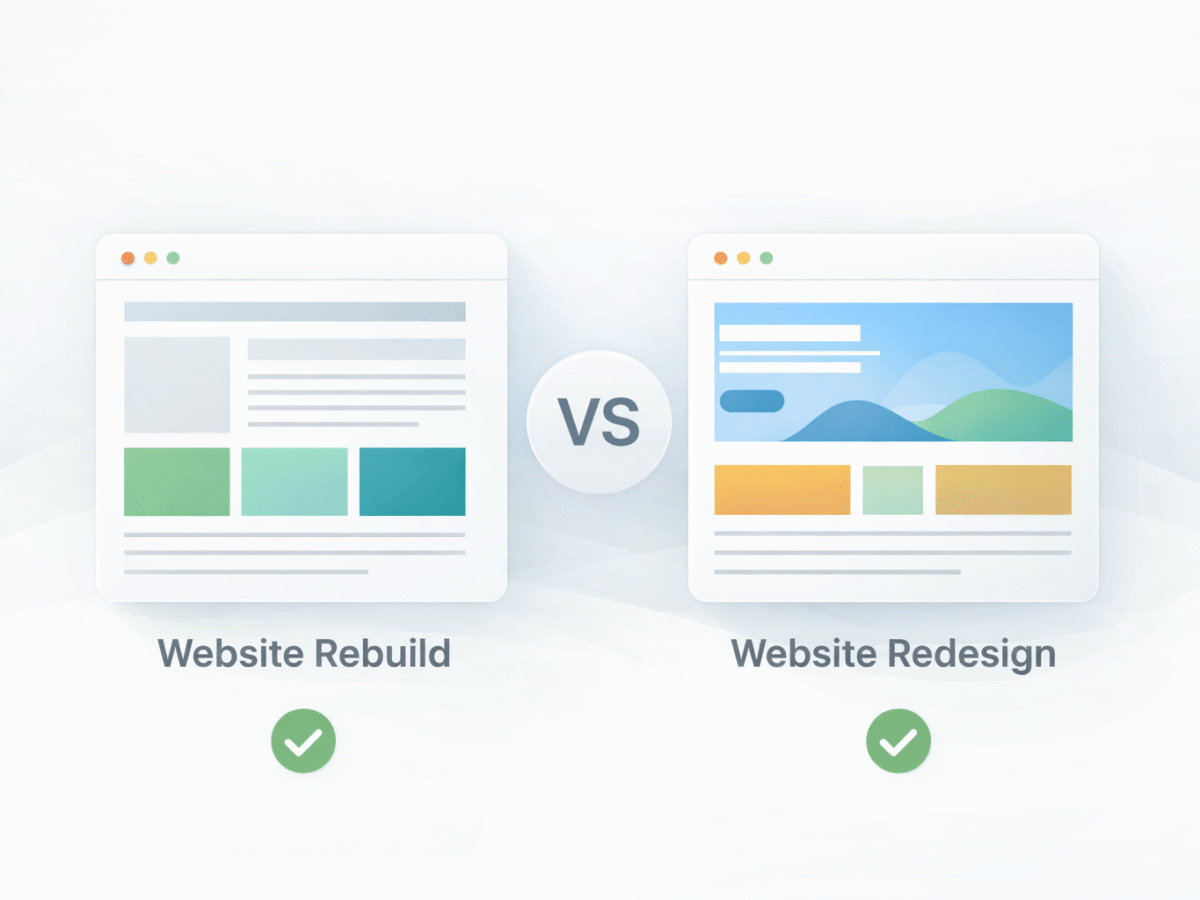
A redesign and a rebuild can look similar in a proposal, but they solve different problems. A redesign changes how the website looks and how information is presented. A rebuild changes the technical foundation, templates, content structure, and often the tools that keep the site running.
Choose a redesign when the foundation is healthy
A focused redesign can be enough when the current platform is stable, pages load quickly, forms work, the mobile experience is sound, and the site is easy to update. In that situation, clearer hierarchy, better calls to action, stronger typography, and improved content may produce the needed change without replacing the whole system.
Choose a rebuild when the problems are structural
A rebuild becomes the better investment when the site depends on a bloated page builder, inherited plugins conflict, templates are inconsistent, mobile layouts break, URLs are disorganized, forms fail, or every update creates another workaround. Those problems are not decorative. They live in the foundation.
Protect search equity during the move
Changing a website without mapping its URLs can erase years of useful signals. A controlled rebuild inventories indexable pages, keeps valuable content, creates one-to-one redirects where URLs change, preserves metadata, and checks the live result after launch.
Evaluate the business outcome
The right question is not “Can this design be made prettier?” It is “Will the finished system be faster, clearer, easier to own, and easier to grow?” If the existing foundation can support those outcomes, redesign it. If it cannot, rebuild it deliberately.