 Founder-led WordPress systems

Practical automation
Use AI where it removes real work—not where it creates another demo.
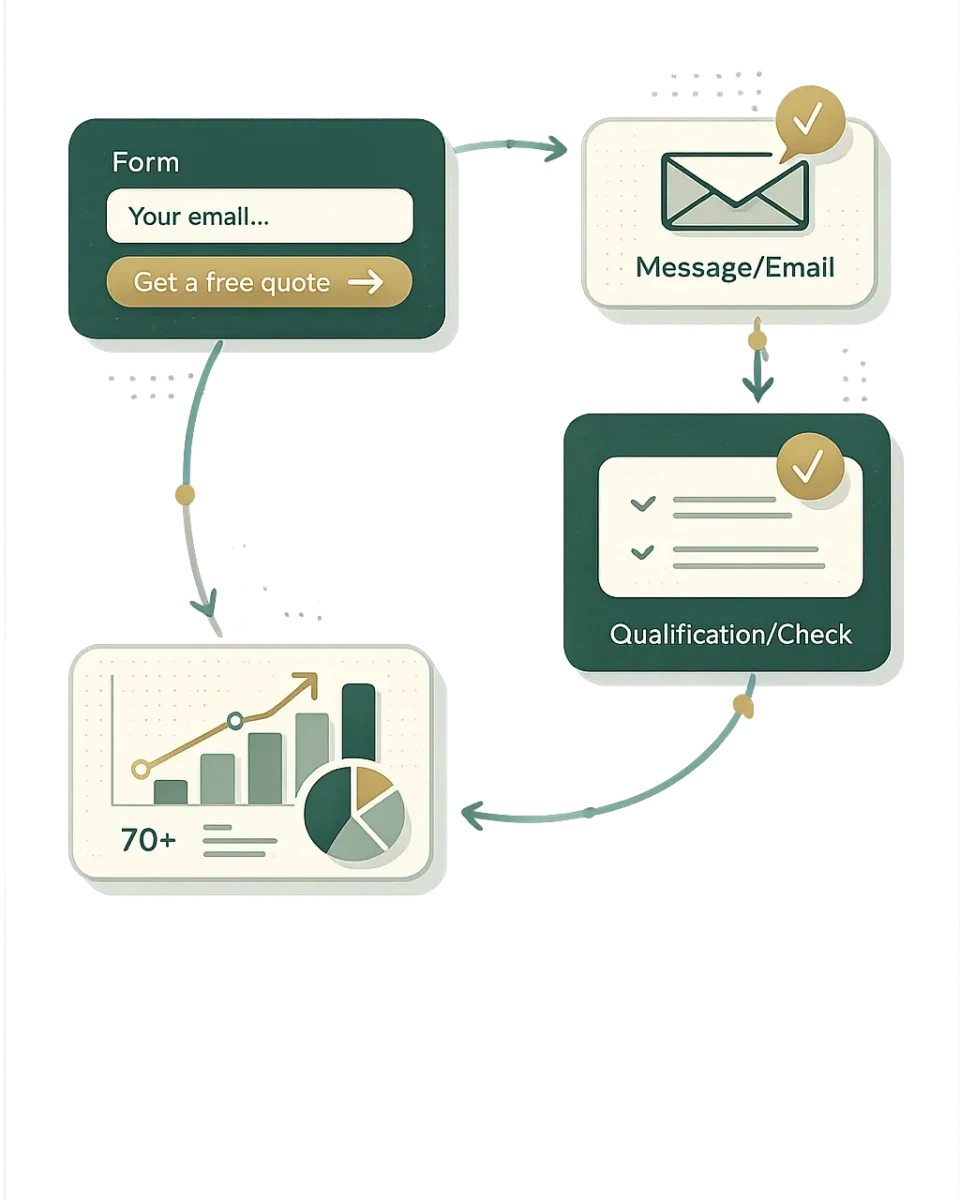
AI-assisted intake, content, summaries, routing, and internal handoffs connected to defined business processes.
The problem beneath the request
Good execution starts by identifying what the visible issue is connected to.
An AI feature without a clear owner, input, review step, or fallback can create unreliable output and more manual cleanup than the task it replaced.
How MooseWeb approaches it
Start with one repeatable workflow, define the source data and human review, connect it through documented APIs, and log enough context to diagnose failure without exposing sensitive data.
Common deliverables
A practical scope built around the result.
Exact deliverables depend on the current stack, access, content, and risk.
What may be included
- Workflow and risk map
- Prompt and input design
- API or automation integration
- Human review checkpoints
- Failure and fallback behavior
- Privacy-conscious logging
- Documentation and iteration plan
What the system is designed to support
- Less repetitive handling
- Faster internal summaries and routing
- A defined human approval point
- A workflow that can be measured
- Clear boundaries for sensitive or unreliable use cases
Questions worth answering
Clarity before scope.
Does every site need AI?
No. Many businesses benefit more from reliable forms, email, content structure, and ownership first.
Can AI publish directly to the website?
It can be technically possible, but an editorial approval step is usually the safer design for public business content.
Will customer data be sent to a model?
Only when the approved workflow and provider terms make that appropriate. Sensitive fields should be minimized, redacted, or excluded.
AI Workflow Automation
Build the scope around the real constraint.
Share the current site or the new system you need. MooseWeb will map the responsible next step.